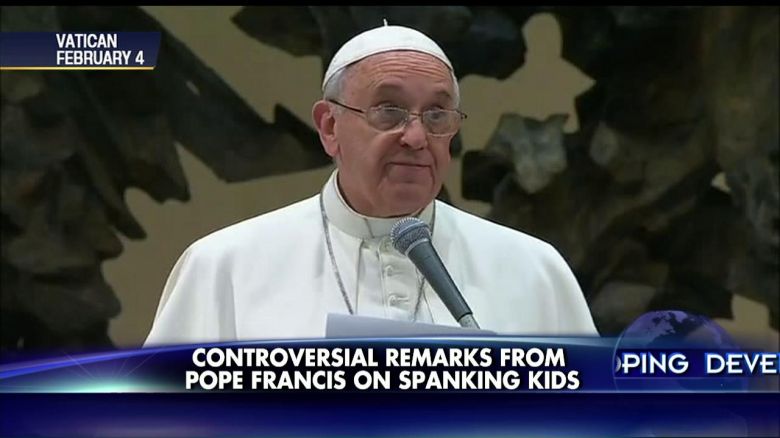
«Un buon padre sa attendere e sa perdonare, dal profondo del cuore. Certo, sa anche correggere con fermezza: non è un padre debole, arrendevole, sentimentale. Il padre che sa correggere senza avvilire è lo stesso che sa proteggere senza risparmiarsi. Una volta ho sentito in una riunione di matrimonio un papà dire: ‘Io alcune volte devo picchiare un po’ i figli… ma mai in faccia per non avvilirli.’. Che bello! Ha senso della dignità. Deve punire, lo fa in modo giusto, e va avanti.» (trascrizione del sito del vaticano News.va dell’udienza generale del 4 Feb 2015)
Devo ammettere che sono rimasta sorpresa e profondamente dispiaciuta (disgustata) per le parole del Papa che definiscono “bello” e con “senso della dignità” picchiare i figli se si ha l’avvertenza di non farlo in faccia per non avvilirli.
L’affermazione è di una superficialità disarmante pensando al ruolo e al seguito che riveste la persona che l’ha pronunciata.
Quante violenze nei confronti dei minori si perpetrano tra le mura domestiche, spesso proprio giustificate dalla necessità di mostrare fermezza e non debolezza, arrendevolezza o sentimentalismo.
Fornire un alibi alla violenza sui figli, è come aprire un vaso di Pandora senza conoscerne appieno le conseguenze.
Parlare con semplicità alla gente non deve implicare la rinuncia a spiegare che è certamente più difficile educare e redarguire un figlio con l’esempio e la persuasione piuttosto che con la violenza, ma contribuisce a formare uomini e donne migliori.
Ogni volta che alziamo una mano su un figlio lediamo la nostra autorità e la nostra credibilità, imponendo un’opinione invece che costruire un rapporto di rispetto e fiducia reciproca. Anche se è un’ eccezione, un evento dovuto alla stanchezza o alla disperazione, è una sconfitta personale come genitore.
In tutto questo, l’assordante silenzio dei mezzi mainstream italiani.
HP
— English Version —
Rome, Italy
“A good father knows how to wait and forgive, from the bottom of his heart. Of course, he also knows how to correct with firmness: he isn’t a weak, pliable or sentimental father. A father knows how to correct without being disheartening and is the same who will protect without sparing. It is OK to spank your children in order to discipline them — as long as their dignity is maintained. One time I heard a father in a meeting with married couples say, ‘I sometimes have to smack my children a bit, but never in the face so as to not humiliate them.’ How beautiful! He knows the sense of dignity! He has to punish them but he does it justly and he moves on.” (transcription from the Vatican’s website NEWS.VA from his general meeting from February 4th, 2015) …
I must admit that I was surprised and profoundly disgusted upon hearing of Pope Francis’ words … Defining “beautiful” and “he knows the sense of dignity” whilst hitting your children if there is a a warning to NOT smack the face as to NOT dishearten them …
These statements are disarmingly superficial, thinking of the position (role model?) and the followers of who pronounced them …
How many cases of domestic violence towards minors go on behind closed doors … At times, justified by the necessity to demonstrate firmness and not weakness, consent or sentimentalism …
Providing an alibi of violence towards our children, is like opening up Pandora’s Box without even knowing the consequences …
Talking to people with simplicity shouldn’t involve the abandonment of explaining that it is certainly more difficult to educate and scold our children with a good example and coaxing them, as to doing it with violence, but it contributes for sure in shaping them to become better men and women …
Every time we raise a hand on one of our children, we are damaging our authority and our credibility, chiseling in an opinion, instead of building a reciprocal relationship of respect and trust … Even if it is an exception, a moment of fatique or despair, it is one’s own defeat for us parents …
And, after all of this, the deafening silence from the Italian Press …
HP
No responses yet